
How many solar panels do I need?
A practical way to size a solar installation for a Belgian home: start from your consumption, check your roof and plan for an electric car or heat pump.
By DELEX installation team1 min read
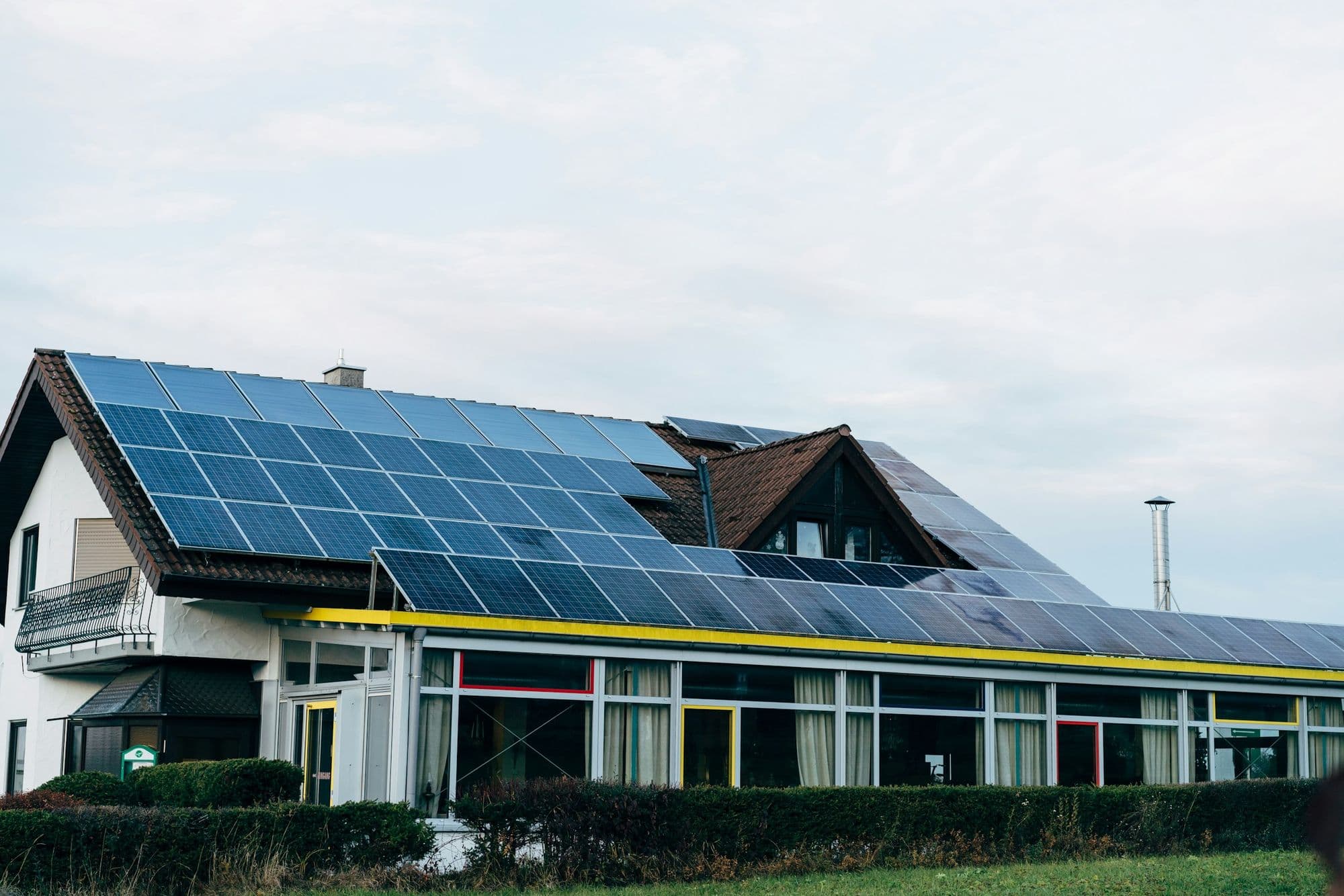
It is the first question almost everyone asks — and the honest answer is: it depends on how you use electricity. Here is how we approach it.
1. Start from your consumption, not your roof
Look at your yearly electricity consumption on your annual bill or in your grid operator's portal. An average Belgian household uses around 3,500 kWh per year, but we see anything from 2,000 to 8,000 kWh.
In Belgium, one kilowatt-peak (kWp) of well-oriented panels produces roughly 900–950 kWh per year. A modern panel of 430–450 Wp therefore yields about 380–420 kWh.
A household using 3,500 kWh needs roughly 3.8–4 kWp, or 9 to 10 panels.
2. Think about the next five years
Planning an electric car or a heat pump? An EV driving 15,000 km per year adds about 2,500–3,000 kWh. A heat pump can add 3,000–5,000 kWh. It is usually cheaper to size for that now than to extend later.
3. Your roof sets the limits
Orientation matters less than people think: east–west roofs produce a bit less in total, but spread production over the day, which suits self-consumption. Shade matters more. A chimney shadow over one string can cost far more than a less-than-perfect orientation — which is why we design panel by panel and use optimisers when needed.
4. Self-consumption beats oversizing
Since the end of the reversing meter, energy you use yourself is worth much more than energy you inject. Oversizing an installation only makes sense if you can use or store the extra production. That is where a battery or a smart EV charger can help.
The short version
- Find your yearly consumption.
- Add what you plan to electrify.
- Divide by ~400 kWh per panel.
- Let a site visit confirm what your roof can take.
Want us to do the maths for your home? The free savings calculator gives a first estimate in two minutes.